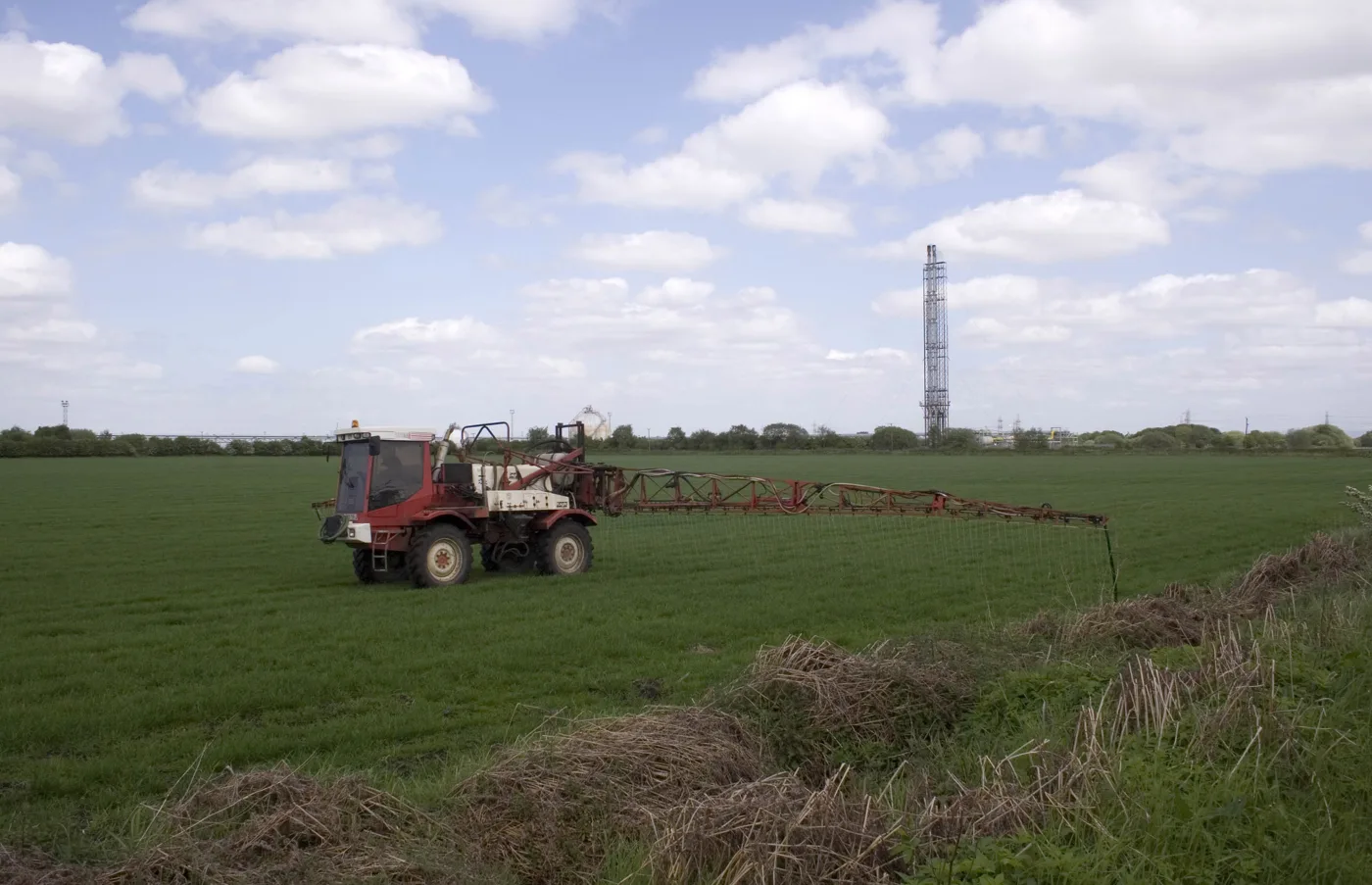

Trafford planners recommend approving the Carrington Relief Road on 5 November, despite over 870 objection letters. The chemical works next door still objects.
Trafford’s planning officers want councillors to approve the Carrington Relief Road. Their report for next Thursday’s planning committee recommends that permission is granted, subject to conditions.
Updated 11 November: councillors approved the road by seven votes to six on 5 November. The council now expects it to be finished in 2032, with main construction from March 2029. Read our report on the decision.
The committee meets at 6.30pm on Thursday 5 November in the Council Chamber at Trafford Town Hall. The road is the first of two applications on the agenda (Trafford Council: Planning Committee agenda, 5 November 2026).
Trafford Council is both the applicant and the planning authority. Its own committee will decide its own road.
What would be built
The application, 118033/FUL/25, is for a new road about 4km long. It would run from the A6144 Manchester Road in Carrington to the Carrington Spur in Sale, about three miles north of Altrincham. The site covers about 46.5 hectares.
The report describes two halves:
- the west, which follows an existing private road, the “A1 Road”, through the former Shell petrochemical site
- the east, from Isherwood Road towards Sale, which crosses mostly arable fields in the Green Belt
The scheme also includes junction changes at Manchester Road, Isherwood Road and the Carrington Lane, Banky Lane and Carrington Spur junction. There would be a walking and cycling route alongside, noise bunds, drainage ponds and landscaping (officers’ report, application index and reports pack).
The report models an opening year of 2030.
Why officers back it
The report calls the road “the first, fundamental step” in New Carrington, the large housing and employment allocation in the Places for Everyone plan. It says the allocation “cannot come forward without it”.
It lists the benefits officers weighed:
- a second route that takes traffic off the A6144, with more reliable bus times
- better links for Carrington and Partington, which the report describes as isolated communities
- a walking and cycling corridor
- jobs and apprenticeships during construction
- a net gain in biodiversity in the long run, after short-term harm
The report says the road helped Trafford secure £89.1m of Good Growth Funding from the Greater Manchester Combined Authority in March 2026. Refusing it, the report says, would put that money at risk.
Officers also set out the harms they accept: the loss of good farmland, “significant harm to biodiversity in the short-term”, damage to the landscape, traffic noise for some homes and path users, and carbon emissions in building and use. They conclude the benefits outweigh them.
On the Green Belt, officers conclude the road is not inappropriate development. The report says it is transport infrastructure that needs a Green Belt location, keeps the loss of openness to a minimum, and does not significantly conflict with the purposes of the Green Belt.
The objections
The report records more than 680 letters of objection to the first round of consultation and a further 191 to the second. Two letters supported the scheme.
Objectors raised, among other things:
- more traffic, and less harmful routes that were not chosen
- the effect on Carrington Moss, its peat and its wildlife
- noise, air quality and carbon
- flood risk and the loss of farmland
- footpaths and bridleways being cut through
- harm to the Green Belt
The Friends of Carrington Moss sent an extensive objection and asked supporters to send a summary version of it, the report says.
These figures are higher than the comment count on the planning register when we reported in October. The report is the council’s own tally of letters received.
The chemical works next door
The western half runs through the site of CTO Polyolefins, a major accident hazard site. The company holds a long lease on the A1 Road and objects to it becoming a public highway, as we reported in our earlier story.
CTO says the change would affect its operations and its duties under the COMAH safety rules. It says power cables and fire water pipes run under the road. If those failed, it says, it might have to shut down while they were fixed.
Officers answer it in three ways:
- The Health and Safety Executive “Do Not Advise Against” the scheme. The report says the HSE’s advice is the right test of risk to the public. It adds that the HSE treats road users as exposed only briefly.
- The road was always meant to go that way. The Places for Everyone plan shows the route using the existing A1 Road.
- The council’s safety strategy would be firmed up by condition. It would have to show, for example, how CTO keeps access during construction.
On the shutdown risk, the report says CTO’s fire water supply already crosses the existing A6144. A burst or a COMAH event could be handled by closing the new road at short notice, “as with any other public utility pipeline”.
What it means for you
If you drive the A6144 between Sale, Carrington and Partington, this is the decision that sets whether a second road is built. The report’s own model puts opening in 2030.
The meeting is public and is streamed on the council’s YouTube channel. The agenda allows 15 minutes of public questions. Questions must be sent in writing to democratic.services@trafford.gov.uk by 4pm on Wednesday 4 November, the working day before.
A recommendation is not a decision. Councillors can go against their officers. We will report the outcome. The roads around it are covered on our Altrincham roadworks page, and the borough’s other big applications on our Altrincham planning news page.
Sources
- Trafford Council: Planning Committee, 5 November 2026, agenda, for the time, venue, broadcast and public questions rule.
- Application index and the officers’ reports pack, for the recommendation, the objection counts, the HSE advice, the CTO Polyolefins assessment and the £89.1m funding.
- Trafford planning register: 118033/FUL/25.
Have your say